Topicality
“Meetings with Recent History” – a lecture and films about the Cursed Soldiers.
REMINDER!
March 1 was established as the National Day of Remembrance of the Cursed Soldiers by a 2011 resolution of the Sejm Rzeczypospolitej Polskiej.
It is worth noting that the legislative initiative to introduce this new national holiday was first undertaken in 2010 by President Lech Kaczyński.
March 1 was established as the National Day of Remembrance of the Cursed Soldiers by a 2011 resolution of the Sejm Rzeczypospolitej Polskiej.
It is worth noting that the legislative initiative to introduce this new national holiday was first undertaken in 2010 by President Lech Kaczyński.
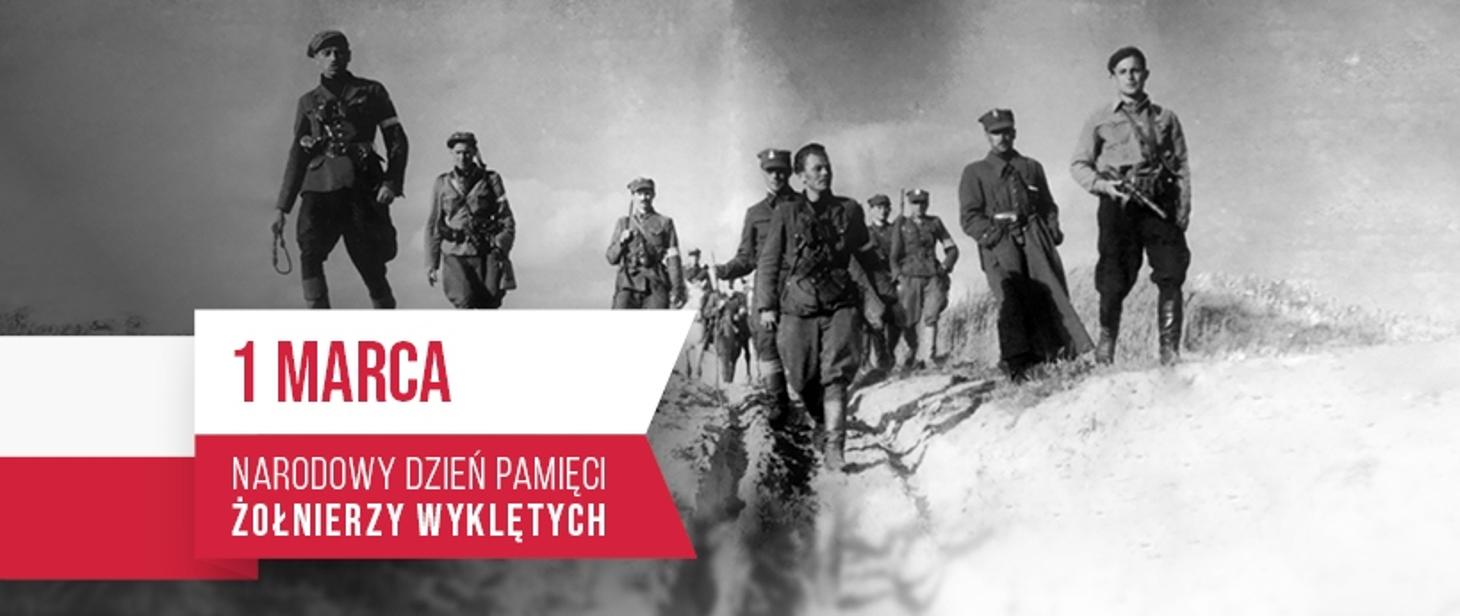
For many years, the Muzeum Ziemi Sądeckiej (The Sącz Land Museum) in cooperation with the Instytut Pamięci Narodowej Branch in Kraków has commemorated the “Unbroken Soldiers” – heroes of the anti-communist underground – and promoted knowledge about those tragic days in Polish history.
The Museum in Nowy Sącz has undertaken this mission by organizing annual educational activities as part of the series “Meetings with Recent History.” These sessions address the unequal struggle of independence organizations and groups against the Soviet-imposed authorities after World War II.
With the need to present historical truth to the public in mind, we believe that this form of educational outreach is an important element of patriotic education and will undoubtedly deepen the younger generation’s understanding of contemporary history.
Proposed Programme:
1. Introductory lecture
(approx. 30 minutes – timing to be agreed)
2. Documentary film illustrating the dramatic events of that period
(selected from the list below, each accompanied by a short introduction)
1) “Zapora”, dir. K. Starczewski (67 min.)
A documentary devoted to Major Hieronim Dekutowski. The hour-long film consists primarily of recollections by “Zapora’s” subordinates, colleagues, friends, and family members. Their testimonies create a vivid and dramatic portrait of one of the most outstanding partisan commanders of the Lublin region – a member of the Cichociemni, a soldier of the Polish independence underground, murdered by the communists and condemned by them to oblivion. The filmmakers enrich these accounts with animated sequences using modern film and computer techniques, making the documentary visually engaging and accessible to younger audiences.
2) “Operation Tempest in the Kraków District”, dir. D. Walusiak (30 min.)
At the end of the German occupation, the Headquarters of the Home Army developed a new operational plan under the codename “Tempest.” Its military aim was to harass retreating German forces and carry out diversionary actions on communication lines. The political objective was to establish Polish administration loyal to the Government-in-Exile in liberated areas before the arrival of Soviet troops. The Kraków District of the Home Army, one of the most significant in occupied Poland, played a crucial role in this operation.
3) “The Last…”, screenplay by T. Doroszuk and A. Sikorski, dir. A. Sikorski (23 min.)
The film portrays Józef Franczak, nom de guerre “Lalek,” the last armed partisan of the anti-communist underground in the Lublin region. It presents the mechanisms of his pursuit by the communist security apparatus and the dramatic circumstances of his death during a joint MO and SB operation on 21 October 1963. The documentary includes unique testimonies and previously unpublished archival materials from the IPN.
4) “Poland Is Searching for Heroes”, dir. A. Gołębiewski (19 min.)
A documentary about the search for victims of communist terror in Poland. The narrative centers on Danuta Siedzikówna “Inka.”
5) “The Cursed Chaplain: Fr. Władysław Gurgacz – Chaplain of the Polish Underground”, dir. B. Grabowska and P. Grabowski (39 min.)
A portrait of the Jesuit priest Fr. Władysław Gurgacz, who in 1948 joined the Polish Underground Independence Army operating in the Sącz region. He provided pastoral care to anti-communist partisans and was sentenced to death by the communist authorities for celebrating field Masses and teaching Catholic principles.
We encourage teachers, students of upper primary and secondary schools, and all those interested in this subject – as well as anyone wishing to honor the heroes of that era – to take part in this unique history lesson.
Film screenings will be organized upon prior registration and selection of a film (or film set) for each group individually. Screenings are scheduled from March 2 to March 16, between 9:00 a.m. and 2:00 p.m.
Screenings will be held for groups of 10–30 participants in the educational hall of the Main Building, ul. Jagiellońska 56 (1st floor), in order of registration. Individual arrangements of dates and times are possible.
To register, please contact the Education Department by 9 March:
Tel. +48 18 443 77 08 ext. 123 or 124
E-mail: edukacja@muzeum.sacz.pl
Admission is free.
After the screening, and upon prior arrangement, it is also possible to visit the permanent exhibition in the Main Building as part of the “Sącz Atmospheres” project at a special price (50% of the reduced ticket – PLN 5 per person). Duration: approx. 30–40 minutes.
We also invite you to explore other educational offerings available at: www.muzeum.sacz.pl
The Museum in Nowy Sącz has undertaken this mission by organizing annual educational activities as part of the series “Meetings with Recent History.” These sessions address the unequal struggle of independence organizations and groups against the Soviet-imposed authorities after World War II.
With the need to present historical truth to the public in mind, we believe that this form of educational outreach is an important element of patriotic education and will undoubtedly deepen the younger generation’s understanding of contemporary history.
Proposed Programme:
1. Introductory lecture
(approx. 30 minutes – timing to be agreed)
2. Documentary film illustrating the dramatic events of that period
(selected from the list below, each accompanied by a short introduction)
1) “Zapora”, dir. K. Starczewski (67 min.)
A documentary devoted to Major Hieronim Dekutowski. The hour-long film consists primarily of recollections by “Zapora’s” subordinates, colleagues, friends, and family members. Their testimonies create a vivid and dramatic portrait of one of the most outstanding partisan commanders of the Lublin region – a member of the Cichociemni, a soldier of the Polish independence underground, murdered by the communists and condemned by them to oblivion. The filmmakers enrich these accounts with animated sequences using modern film and computer techniques, making the documentary visually engaging and accessible to younger audiences.
2) “Operation Tempest in the Kraków District”, dir. D. Walusiak (30 min.)
At the end of the German occupation, the Headquarters of the Home Army developed a new operational plan under the codename “Tempest.” Its military aim was to harass retreating German forces and carry out diversionary actions on communication lines. The political objective was to establish Polish administration loyal to the Government-in-Exile in liberated areas before the arrival of Soviet troops. The Kraków District of the Home Army, one of the most significant in occupied Poland, played a crucial role in this operation.
3) “The Last…”, screenplay by T. Doroszuk and A. Sikorski, dir. A. Sikorski (23 min.)
The film portrays Józef Franczak, nom de guerre “Lalek,” the last armed partisan of the anti-communist underground in the Lublin region. It presents the mechanisms of his pursuit by the communist security apparatus and the dramatic circumstances of his death during a joint MO and SB operation on 21 October 1963. The documentary includes unique testimonies and previously unpublished archival materials from the IPN.
4) “Poland Is Searching for Heroes”, dir. A. Gołębiewski (19 min.)
A documentary about the search for victims of communist terror in Poland. The narrative centers on Danuta Siedzikówna “Inka.”
5) “The Cursed Chaplain: Fr. Władysław Gurgacz – Chaplain of the Polish Underground”, dir. B. Grabowska and P. Grabowski (39 min.)
A portrait of the Jesuit priest Fr. Władysław Gurgacz, who in 1948 joined the Polish Underground Independence Army operating in the Sącz region. He provided pastoral care to anti-communist partisans and was sentenced to death by the communist authorities for celebrating field Masses and teaching Catholic principles.
We encourage teachers, students of upper primary and secondary schools, and all those interested in this subject – as well as anyone wishing to honor the heroes of that era – to take part in this unique history lesson.
Film screenings will be organized upon prior registration and selection of a film (or film set) for each group individually. Screenings are scheduled from March 2 to March 16, between 9:00 a.m. and 2:00 p.m.
Screenings will be held for groups of 10–30 participants in the educational hall of the Main Building, ul. Jagiellońska 56 (1st floor), in order of registration. Individual arrangements of dates and times are possible.
To register, please contact the Education Department by 9 March:
Tel. +48 18 443 77 08 ext. 123 or 124
E-mail: edukacja@muzeum.sacz.pl
Admission is free.
After the screening, and upon prior arrangement, it is also possible to visit the permanent exhibition in the Main Building as part of the “Sącz Atmospheres” project at a special price (50% of the reduced ticket – PLN 5 per person). Duration: approx. 30–40 minutes.
We also invite you to explore other educational offerings available at: www.muzeum.sacz.pl