Topicality
Magdalena Kroh, winner of the 51st Oskar Kolberg Award for Merit to Folk Culture
We are pleased to announce that the winner of this year's 51st Oskar Kolberg Award "For Merit to Folk Culture" is our museum colleague, renowned ethnographer Magdalena Kroh. The award recognizes creators, researchers, and organizations that preserve, develop, and promote the heritage of Polish traditional culture.
Magda, congratulations!
Magda, congratulations!
In this year's edition, the jury selected thirteen winners, representing various regions of Poland. Magdalena Kroh received the award in Category IV – for researchers, scientists, regionalists, socio-cultural activists, and popularizers. For the record, Warsaw-based ethnomusicologist Zbigniew Przerembski also received the award in the same category.
The awards gala will take place on July 3, 2026, at the Royal Castle in Warsaw. Winners will receive Oskar Kolberg medals designed by Anna Jarnuszkiewicz, commemorative diplomas, and financial prizes funded by the Minister of Culture and National Heritage and the Mazovian Voivodeship Government.
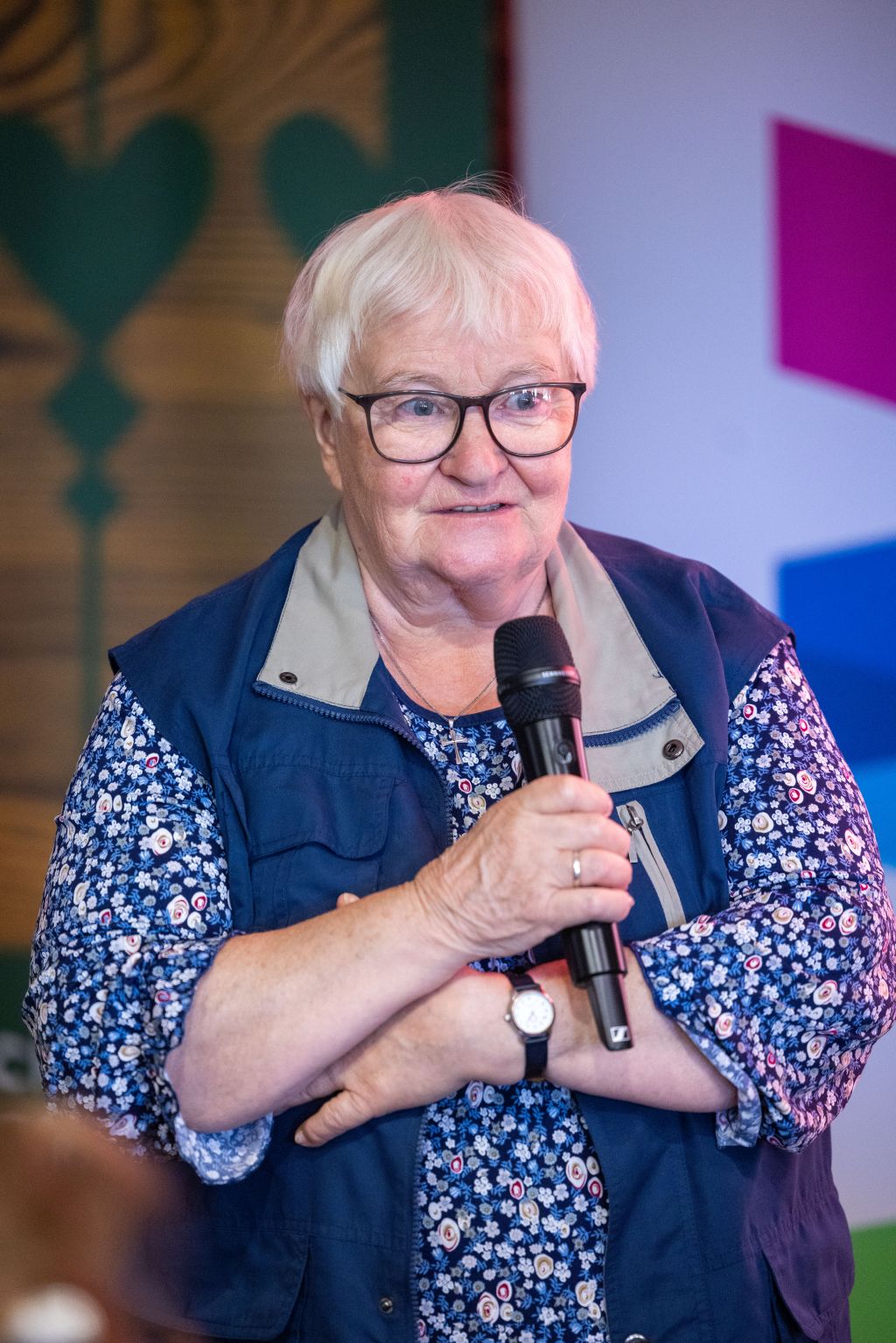
Maria Magdalena Kroh was born on March 31, 1944, in Warsaw. She completed a master's degree in ethnography and postgraduate studies in museology. In 1967, she began working at the Władysław Orkan Museum in Rabka-Zdrój. In 1969-70, she worked at the Tatra Museum in Zakopane and in 1971-72 at the State Ethnographic Museum in Warsaw. In the 1970s, she established a permanent connection with Nowy Sącz. For 33 years, she worked as an ethnographer at the Sądecczyzna open-air museum. Initially, she was involved in the creation and expansion of the Sądecczyzna Ethnographic Park. She participated in the relocation of valuable rural architectural objects and developed interior design plans.
For many years, Magdalena Kroh conducted field research on rural folk culture. She published numerous works on the Sącz region, including guidebooks and articles. She wrote for "Polska Sztuka Ludowa" (Polish Folk Art) and numerous regional magazines. Her guide to the Sądecki Ethnographic Park has been reprinted numerous times. In "What a Saint Gwiozdecka on Osowiom" (What a Saint She Sings) she described the caroling customs of Podegrodzie, and in "Kumosia Kumosi Gorzołecke Noshes" (What a Saint She Sings) she described the birth and funeral customs of Podegrodzie. She is also the author of the book "Wesele Podegrodzkie" (The Podegrodzie Wedding). She edited a work entitled "Folk Culture of the Sądecki Highlanders from Kamienica, Łącka, and Jazowska."
Magdalena Kroh has written scripts and produced numerous ethnographic exhibitions and those devoted to the life of the region. Among them, she designed the well-received exhibition "25 Years of Solidarity in Sądecki."
She retired in 2005, but remains active and involved in the affairs of the Nowy Sącz museum. He willingly shares his extensive ethnographic knowledge with his younger colleagues at the Sądecki Ethnographic Park. He collaborates with the Małopolska Centre
For many years, Magdalena Kroh conducted field research on rural folk culture. She published numerous works on the Sącz region, including guidebooks and articles. She wrote for "Polska Sztuka Ludowa" (Polish Folk Art) and numerous regional magazines. Her guide to the Sądecki Ethnographic Park has been reprinted numerous times. In "What a Saint Gwiozdecka on Osowiom" (What a Saint She Sings) she described the caroling customs of Podegrodzie, and in "Kumosia Kumosi Gorzołecke Noshes" (What a Saint She Sings) she described the birth and funeral customs of Podegrodzie. She is also the author of the book "Wesele Podegrodzkie" (The Podegrodzie Wedding). She edited a work entitled "Folk Culture of the Sądecki Highlanders from Kamienica, Łącka, and Jazowska."
Magdalena Kroh has written scripts and produced numerous ethnographic exhibitions and those devoted to the life of the region. Among them, she designed the well-received exhibition "25 Years of Solidarity in Sądecki."
She retired in 2005, but remains active and involved in the affairs of the Nowy Sącz museum. He willingly shares his extensive ethnographic knowledge with his younger colleagues at the Sądecki Ethnographic Park. He collaborates with the Małopolska Centre