Exhibition
Exhibition "Stręk, Więcek, Głód... Polish folk art and art brut from the Jochen Schmidt collection"
On May 2nd, at the Nikifor Museum in Krynica-Zdrój, Berlin-based art collector Jochen Schmidt officially donated part of his collection of folk sculptures and paintings, as well as art brut, which he amassed in the 1980s and 1990s, to the Sądecka Land Museum. The donated works can be viewed at the exhibition "Stręk, Więcek, Głód... Polish folk art and art brut from the Jochen Schmidt Collection."
Jochen Schmidt, a resident of Berlin and an employee of the Anti-War Museum in the German capital, began visiting Poland in the mid-1980s. While traveling around the country, he became fascinated by folk art. He visited folk artists in various regions of Poland, including the Sącz area, for example in the well-known center of folk sculpture and glass painting in Paszyn near Nowy Sącz, which at that time was experiencing its golden years. He met many artists—people with remarkable personalities—who are now regarded as classics of contemporary Polish folk art and art brut.
From the mid-1990s onward, as a collaborator of the International Youth Meeting Center in Oświęcim, he came to Poland annually, organizing exhibitions and educational programs with a pacifist message on behalf of the Anti-War Museum. At the same time, he sought to meet more artists. He became friends with experts in folk art and collectors, including Professor Marian Pokropek, Leszek Macak, and Ferdynand Kijak-Solowski. He also established relationships with numerous Polish museums that collect folk art.
Jochen Schmidt’s fascination with folk creativity led him to begin building a collection. Over time, it grew to around 800 works, becoming one of the richer private collections of contemporary Polish folk art in Europe. Parts of it have been exhibited several times in Germany. Schmidt’s collection includes sculptures and paintings by such well-known artists as Stanisław Hołda from Nowy Sącz; the Paszyn artists—Wojciech Oleksy, Stanisław Mika, Andrzej Drożdż, and Henryk Głód; Karol Wójciak from Orawa, known as “Heródek”; Nikifor Krynicki; Maria Wnęk from Olszanka near Podegrodzie; Ludwik Więcek from Wilczyska near Grybów; Katarzyna Gawłowa from Zielonki near Kraków; and Julian Stręk, a sculptor from Pustków near Dębica.
Jochen Schmidt decided to donate part of his collection—nearly 120 objects, including wooden sculptures and paintings—to the Sącz Region Museum. The official handover will take place at the Nikifor Museum in Krynica-Zdrój on May 2 at 12:00 p.m., during the opening of the exhibition “Stręk, Więcek, Głód… Polish Folk Art and Art Brut from the Jochen Schmidt Collection.” Within the donated collection, the work of two original artists whose creations go beyond traditional folk art canons—Julian Stręk (1932–2000) and Ludwik Więcek (1911–1995)—is particularly well represented. Today, specialists place their work on the border between contemporary folk art and art brut.
Jochen Schmidt’s contacts with the Sącz museum date back to the year 2000, when the institution organized an exhibition of Julian Stręk’s works at the Nikifor Museum in Krynica-Zdrój. At that time, the collector provided valuable information about the sculptor and photographs of many of his works from his own collection. Jochen Schmidt was among the first to recognize the extraordinary dimension of this modest artist’s work. At the exhibition opening, the distinguished film director Krzysztof Krauze publicly stated that Stręk’s work could be displayed in any art gallery in Europe. He later built an interesting collection of Stręk’s works himself. Stręk’s sculptures are usually complex wooden constructions made of many elements. It is difficult to clearly determine what they represent. The artist did not describe or explain his works. In some, one might discern royal tombs at Wawel, nativity scenes, or cathedrals. Stręk died as a result of injuries sustained in a road accident.
From the mid-1990s onward, as a collaborator of the International Youth Meeting Center in Oświęcim, he came to Poland annually, organizing exhibitions and educational programs with a pacifist message on behalf of the Anti-War Museum. At the same time, he sought to meet more artists. He became friends with experts in folk art and collectors, including Professor Marian Pokropek, Leszek Macak, and Ferdynand Kijak-Solowski. He also established relationships with numerous Polish museums that collect folk art.
Jochen Schmidt’s fascination with folk creativity led him to begin building a collection. Over time, it grew to around 800 works, becoming one of the richer private collections of contemporary Polish folk art in Europe. Parts of it have been exhibited several times in Germany. Schmidt’s collection includes sculptures and paintings by such well-known artists as Stanisław Hołda from Nowy Sącz; the Paszyn artists—Wojciech Oleksy, Stanisław Mika, Andrzej Drożdż, and Henryk Głód; Karol Wójciak from Orawa, known as “Heródek”; Nikifor Krynicki; Maria Wnęk from Olszanka near Podegrodzie; Ludwik Więcek from Wilczyska near Grybów; Katarzyna Gawłowa from Zielonki near Kraków; and Julian Stręk, a sculptor from Pustków near Dębica.
Jochen Schmidt decided to donate part of his collection—nearly 120 objects, including wooden sculptures and paintings—to the Sącz Region Museum. The official handover will take place at the Nikifor Museum in Krynica-Zdrój on May 2 at 12:00 p.m., during the opening of the exhibition “Stręk, Więcek, Głód… Polish Folk Art and Art Brut from the Jochen Schmidt Collection.” Within the donated collection, the work of two original artists whose creations go beyond traditional folk art canons—Julian Stręk (1932–2000) and Ludwik Więcek (1911–1995)—is particularly well represented. Today, specialists place their work on the border between contemporary folk art and art brut.
Jochen Schmidt’s contacts with the Sącz museum date back to the year 2000, when the institution organized an exhibition of Julian Stręk’s works at the Nikifor Museum in Krynica-Zdrój. At that time, the collector provided valuable information about the sculptor and photographs of many of his works from his own collection. Jochen Schmidt was among the first to recognize the extraordinary dimension of this modest artist’s work. At the exhibition opening, the distinguished film director Krzysztof Krauze publicly stated that Stręk’s work could be displayed in any art gallery in Europe. He later built an interesting collection of Stręk’s works himself. Stręk’s sculptures are usually complex wooden constructions made of many elements. It is difficult to clearly determine what they represent. The artist did not describe or explain his works. In some, one might discern royal tombs at Wawel, nativity scenes, or cathedrals. Stręk died as a result of injuries sustained in a road accident.
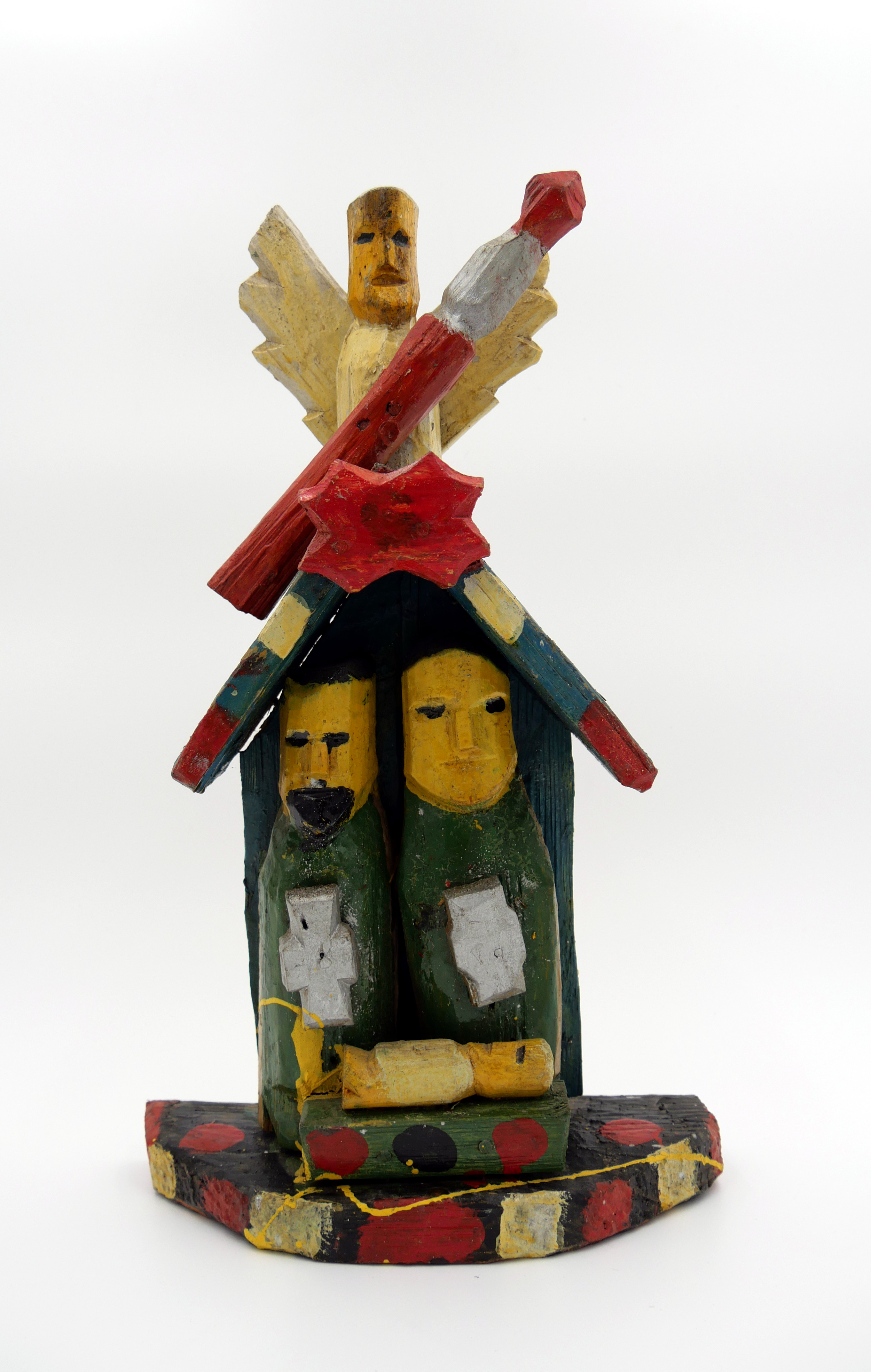
Julian Stręk, untitled, polychromed wood
Ludwik Więcek, in turn, was one of the last representatives of authentic naïve painting in the Carpathians. In his work, he primarily recreated a world close to him—good, friendly, and familiar. Even when he depicted scenes of Golgotha, he placed them “at home,” within the landscape of the Pogórze region.

Ludwik Więcek, oil painting on fiberboard
Stręk and Więcek are now regarded as some of the most interesting artists associated with the art brut movement in Poland. Their works are sought after by museum professionals and private collectors alike, and they appear at auctions. This makes the value of the gift that Jochen Schmidt donated to the Sącz Region Museum all the more significant.
The collection donated to the museum by Jochen Schmidt also includes sculptures by Henryk Głód from Paszyn, Józef Zganiacz from Fałków, Wojciech Górka and Kazimierz Michalik from Mystków, Józef Jędrocha from Tokarnia, and Józef Kaczmarek from Chycza.
Zbigniew Wolanin
The collection donated to the museum by Jochen Schmidt also includes sculptures by Henryk Głód from Paszyn, Józef Zganiacz from Fałków, Wojciech Górka and Kazimierz Michalik from Mystków, Józef Jędrocha from Tokarnia, and Józef Kaczmarek from Chycza.
Zbigniew Wolanin
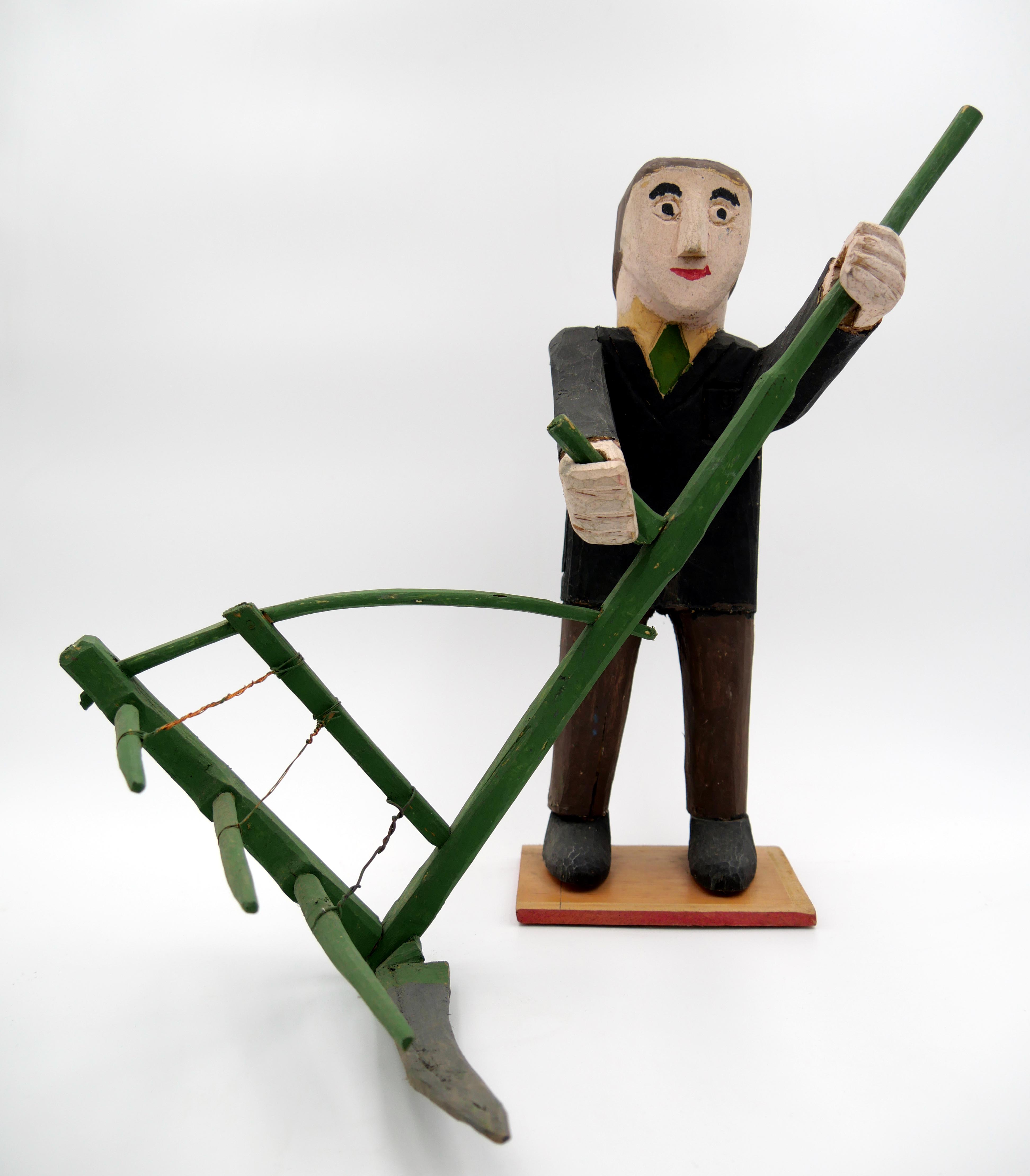
Henryk Głód, "Mower", polychromed wood